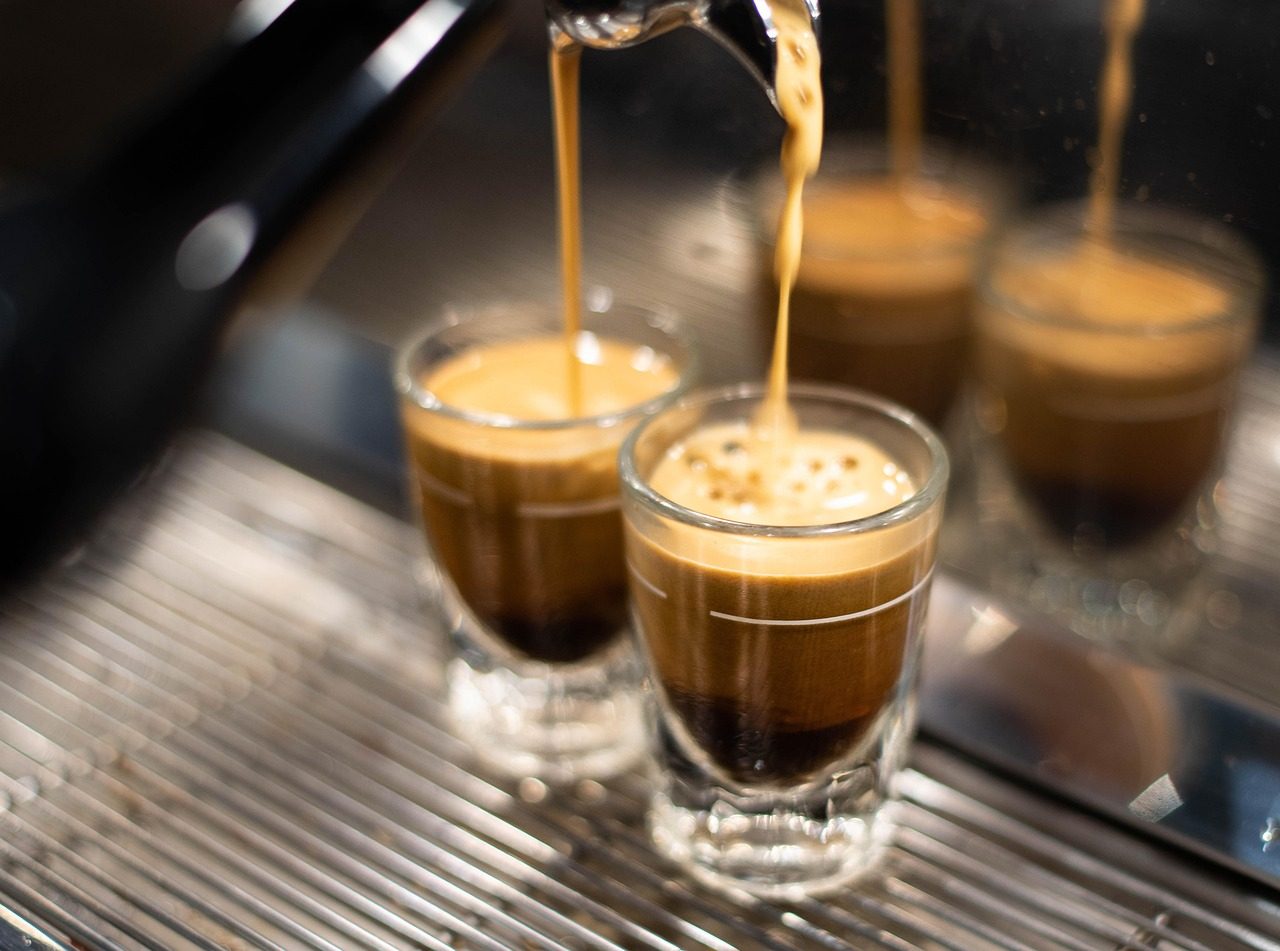
Dialling in sounds like a dark art and is really just bookkeeping. An espresso shot has three numbers — dose, yield and time — and once you write them down, every change you make has a direction. We dial in every new roast this way on the bar, and it takes about four shots.
The three numbers
- Dose: the dry coffee in the basket, in grams. Set it by the basket and leave it alone.
- Yield: the liquid espresso in the cup, weighed, not eyeballed. Crema volume tells you nothing.
- Time: from the moment the pump starts to the moment you stop it.
The relationship between dose and yield is the brew ratio, and it is the single most useful idea in espresso. A 1:2 ratio — 18 g in, 36 g out — is where we start almost everything.
Starting ratios
- Classic espresso: 18 g in, 36 g out, 27–30 seconds (1:2).
- Dark roast, milk drinks: 18 g in, 32 g out, 26–28 seconds (1:1.8) — shorter, sweeter, thicker.
- Light roast, black: 18 g in, 45 g out, 30–34 seconds (1:2.5) — longer, to pull the acidity into balance.
- Water temperature: 93 °C for medium and dark, 94–95 °C for light.
- Single basket: 9 g in, 18 g out, same timings.
The dialling-in routine
- Fix the dose. Weigh it every time. An 18 g basket wants 18 g, not “about a scoop” — a gram either way changes the headroom above the puck and with it the whole shot.
- Distribute and tamp level. Break up clumps, settle the bed, tamp flat. Pressure matters far less than being level; a tilted puck channels and no grind adjustment will save it.
- Pull a shot onto a scale. Target your yield and start the timer with the pump.
- Compare against the target time. Too fast means the grind is too coarse; too slow means it is too fine. Adjust the grinder one notch, purge a couple of grams, and pull again.
- Taste only when the time lands. Once you are hitting 36 g in roughly 28 seconds, taste, and move the ratio — not the grind — to tune flavour.
- Write the numbers down. Dose, yield, time, grind setting, date. That card is how you get back to a good shot tomorrow.
What the shot is telling you
Espresso faults are loud, which makes them easy to learn. Sour, thin and watery is under-extraction: either the shot ran too fast or the ratio was too short. Harsh, drying and ashy is over-extraction: it ran too slow or too long. Thin but bitter at the same time usually means channelling, not extraction — water found a crack and skipped most of the puck.
- Shot gushes, finishes in 15 seconds? Grind finer, and check your dose.
- Shot drips past 40 seconds? Grind coarser.
- Right time, still sour? Extend the yield to 1:2.3 and raise the temperature a degree.
- Right time, still bitter? Shorten the yield towards 1:1.8 and drop a degree.
- Puck wet, pitted or cratered? Fix distribution before you touch the grinder.
Practical tips
- Purge the group before every shot and wipe the basket dry. A wet basket makes the first seconds unrepeatable.
- Espresso wants more rest than filter coffee: give a bag seven to ten days after roasting before you judge it.
- Dial in for the drink you actually make. A shot built for a flat white will taste blunt on its own, and that is fine.
- Change one number per shot. Two changes at once tells you nothing.
- Clean the grinder. Stale fines in the chute flatten every shot that follows them.
Where to go next
Nearly every espresso problem is really a grinder problem, so read choosing the right grind size next. If you want the same discipline applied to filter coffee, our step-by-step pour-over guide lays the whole recipe out.
