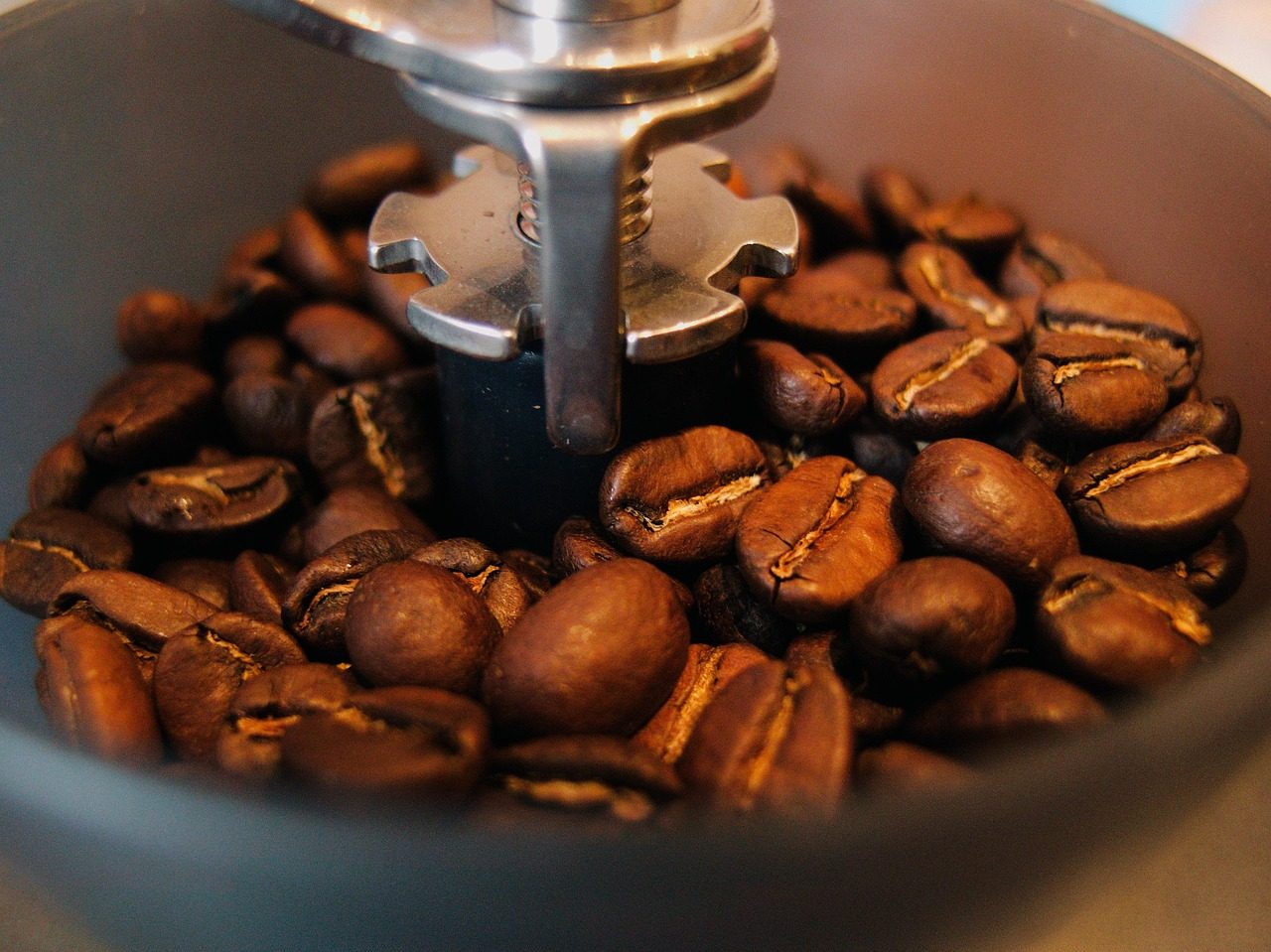
If you buy one piece of equipment well, buy the grinder. Grind size sets the surface area the water meets and how long it takes to pass through, which means it controls extraction more directly than your brewer, your kettle or your beans. It is also the only variable you can change in ten seconds.
Why grind size matters so much
Water pulls acids first, then sugars, then the dry, bitter compounds last. Grind finer and you expose more surface and slow the flow, so extraction goes further. Grind coarser and water moves faster through less surface, so extraction stops earlier. Everything else — temperature, ratio, time — is fine tuning on top of that.
Consistency matters as much as size. Blade grinders smash beans into a mixture of boulders and dust, and the dust over-extracts while the boulders under-extract, so the cup tastes sour and bitter at the same time. Burrs cut to a size, which is why every recipe we publish assumes one.
A grind size for every method
- Turkish / ibrik: powder, finer than flour. No filter, no pressure, boiled in the pot.
- Espresso: fine, like icing sugar that just holds a clump. 18 g in, 36 g out, 27–30 seconds.
- Moka pot: fine-medium, between espresso and filter. Never tamped.
- Aeropress: medium-fine for a short two-minute brew, medium for a three-minute one.
- Pour-over cone (V60, Kalita): medium, like coarse sea salt. 60 g of coffee per litre of water.
- Flat-bottom batch brewer: medium, a touch coarser than a cone.
- Siphon / vacuum pot: medium-coarse, because the immersion is long and the filter is cloth.
- French press: coarse, like raw sugar. Four minutes, then plunge slowly.
- Cold brew: very coarse, like cracked pepper. Twelve to sixteen hours at room temperature or in the fridge.
Dialling by taste, not by number
Grinder dials are not comparable between machines, so treat the list above as a starting point and let the cup decide. Brew, taste, move one notch, brew again.
- Brew the recipe as written and note the total time.
- Taste for the fault, not for “good”. Sour, salty and thin means under-extracted. Dry, hollow and bitter means over-extracted.
- Under-extracted? Grind finer by one notch. The brew will slow down and sweeten.
- Over-extracted? Grind coarser by one notch. The brew will speed up and brighten.
- Repeat until the sweetness peaks. You are looking for the point where acidity and body sit together and nothing sticks out.
Practical tips
- Grind immediately before brewing. Ground coffee loses its aromatics within minutes, and no storage trick stops it.
- Adjust in single notches. Big jumps skip past the setting you wanted.
- Expect to grind finer as a bag ages, and finer again for a lighter roast — dense, lightly roasted beans resist extraction.
- Brush the burrs out monthly. Old fines are the most common cause of a grinder that “suddenly” tastes stale.
- Buy whole bean and keep the bag sealed, cool and out of the light. Not in the freezer, not on top of the kettle.
- If you own one grinder and brew two ways, set it for the fussier method — usually espresso — and keep a note of the other setting.
Grind at the roastery, if you prefer
We grind to order for every brew method on this list. Choose your grind on the bag when you order, and tell us the brewer if you are not sure which to pick — it is on the label so the next bag is easy to repeat.
Where to go next
With the grinder sorted, put it to work: our step-by-step pour-over guide walks through a filter recipe pour by pour, and dialling in espresso by dose, yield and time does the same for the machine.
